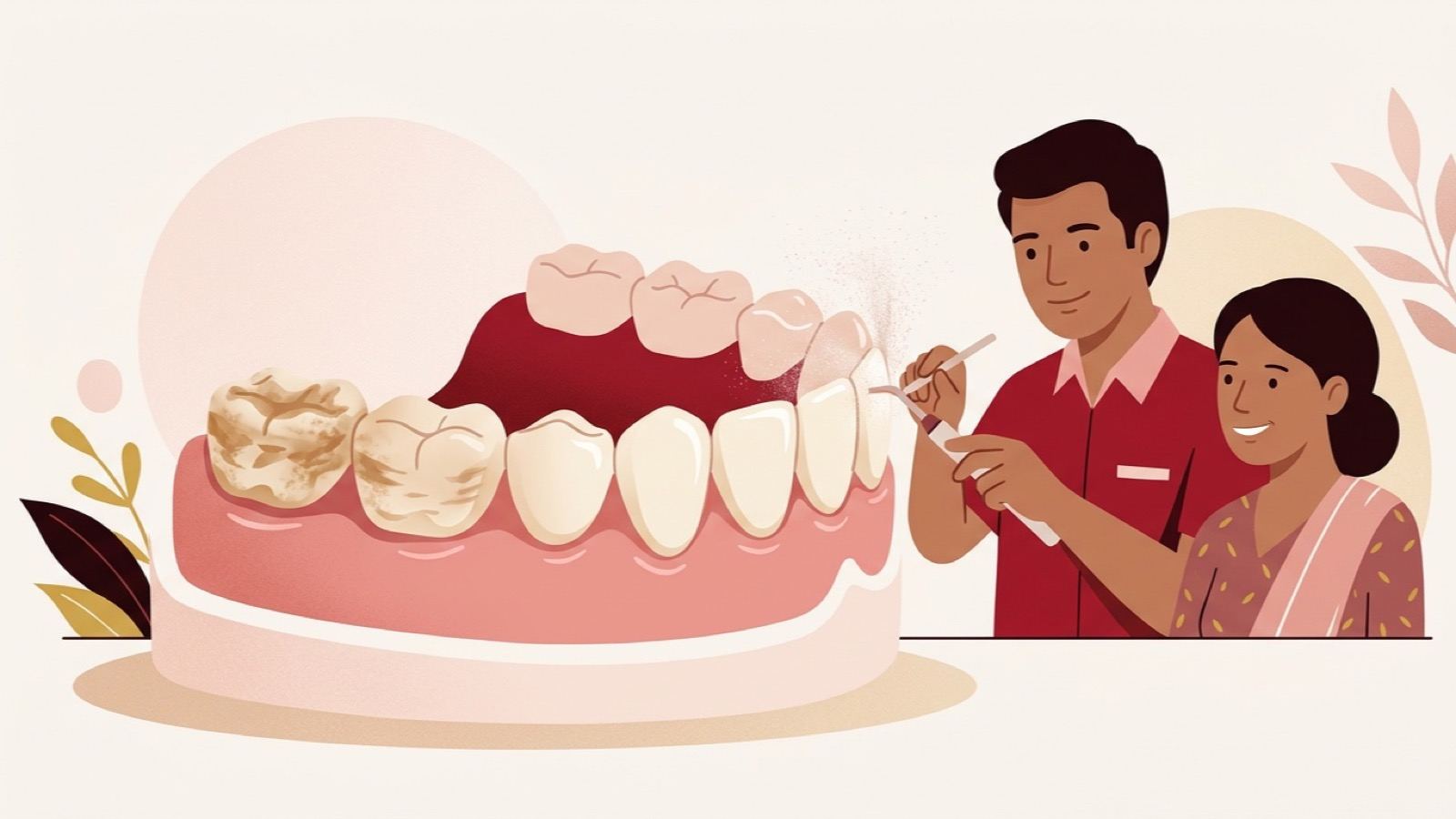
 AI illustration
Dental Fluorosis in Punjab: Treating Brown Enamel Stains
By Dr. Arvind Sahu, BDS, MDS (Prosthodontics & Crown & Bridge) · Registration No. 20407A • Ludhiana, Punjab
Why dental fluorosis is common in Punjab's groundwater belt
Dental fluorosis occurs when children consume drinking water with elevated fluoride levels while permanent teeth develop beneath the gums. In parts of Punjab where groundwater exceeds permissible limits, excess fluoride alters enamel mineralisation, causing permanent white flecks, chalky streaks, or brownish-yellow surface stains.
Key clinical aspects of fluorosis in Punjab:
- Endemic Groundwater Fluoride: Natural deep aquifers in several Punjab districts (including Bathinda, Mansa, Sangrur, and rural Ludhiana belts) contain fluoride levels exceeding the WHO guideline of 1.0 to 1.5 mg/L.
- Developmental Disruption: Between birth and age 8, excess circulating fluoride interferes with ameloblast cell activity, leading to subsurface enamel hypomineralisation.
- Post-Eruptive Staining: While teeth emerge with chalky white patches, the porous outer enamel gradually absorbs dietary pigments from tea, coffee, and turmeric (haldi), turning into darker brown bands over time.
- Preserved Internal Tooth Structure: Fluorotic enamel is structurally intact beneath the surface, meaning treatment should focus on conservative surface management rather than aggressive tooth cutting.
Why standard chemical teeth whitening fails on fluorosis
Commercial whitening gels and over-the-counter bleaching products only target extrinsic organic stains from foods and drinks. Because fluorosis is an intrinsic mineralisation defect deep within the enamel matrix, peroxide bleach cannot erase brown streaks and often accentuates the chalky white patches.
Why conventional whitening is clinically counterproductive:
- The Contrast Problem: Peroxide gels bleach surrounding healthy enamel, frequently making white fluorotic patches appear brighter and more obvious against dark brown spots.
- Dangers of DIY Acids and Charcoal: Many patients try home remedies like lemon juice, baking soda, or abrasive charcoal pastes. These abrasive agents physically abrade porous enamel, exposing sensitive yellow dentine underneath and causing severe tooth sensitivity.
- Diagnostic Requirement: An in-person assessment (₹300), with X-rays where needed, allows Dr. Arvind Sahu to measure the depth of enamel involvement before recommending a restorative approach.
Choosing between microabrasion, composite bonding and veneers
Treatment for fluorosis depends on the depth of enamel discoloration. Superficial stains respond well to conservative chemical-mechanical microabrasion, shallow pitting is restored with direct composite bonding, and extensive deep brown mottling is predictably masked using custom porcelain veneers.
Conservative treatment options:
- Enamel Microabrasion (Mild Fluorosis): A conservative clinical technique using a compound of mild hydrochloric acid and fine pumice. It gently buffs away the outermost 50 to 100 micrometres of discoloured enamel without mechanical drilling, permanently removing superficial brown stains while preserving natural tooth structure.
- Direct Composite Edge Bonding (Moderate / Pitted Fluorosis): When fluorosis presents with localized surface pits or chipping, tooth-coloured resin is layered directly over the defect and sculpted chairside in a single visit, blending seamlessly with surrounding enamel.
- Porcelain Veneers (Severe / Mottled Fluorosis): For teeth with widespread, deep brown staining or extensive surface irregularities, custom ceramic veneers offer the most predictable aesthetic outcome. Ultra-thin glazed ceramic shells are bonded to the front tooth surface, permanently masking discoloration and resisting future tea and turmeric stains.
- Protective Crowns (Structurally Weakened Teeth): When fluorosis has caused severe enamel loss and structural brittleness, full-coverage crowns (from ₹2,000 for PFM and from ₹4,000 for Zirconia) protect the remaining tooth from fracture.
What to expect during cosmetic fluorosis treatment
Conservative fluorosis care is structured to preserve as much natural tooth enamel as possible. Treatment begins with diagnostic shade mapping and intraoral photography, followed by the selected minimally invasive procedure, with little to no post-treatment recovery required.
The clinical treatment pathway: 1. Diagnostic Shade Analysis: High-resolution intraoral assessment identifies whether discoloration is confined to the outer enamel or extends into deeper dentine layers. 2. Conservative Enamel Preparation: For microabrasion or bonding, zero or negligible enamel is removed. For veneers, minimal preparation (0.3 mm to 0.5 mm) is performed under local anaesthesia to maintain tooth vitality. 3. Definitive Finishing & Glazing: Restorations are polished to a high lustre to ensure smooth margins that resist bacterial plaque and everyday food staining. 4. Long-Term Preventive Care: Routine 6-month check-ups (₹300) and professional cleanings (₹1,000) keep restorations clean and monitor gum margin health.
Consult Dr. Arvind Sahu for fluorosis assessment in Ludhiana
Fluorosis treatment requires a tailored clinical plan based on your enamel depth, bite alignment, and smile dynamics. At RedCity Dental, Dr. Arvind Sahu (MDS Prosthodontics) personalises every treatment plan using evidence-based protocols to restore natural tooth appearance without unnecessary drilling.
RedCity Dental is located at 47 A/1 South Model Gram, Ludhiana (near South Model Town), serving patients across Model Town, Pakhowal Road, Sarabha Nagar, and Dugri, as well as visitors traveling from Bathinda, Mansa, and Sangrur.
If you would like Dr. Sahu to review your teeth before visiting, you can send 3 clear photos of your smile (front smile, upper teeth, and lower teeth) via WhatsApp to +91 76268 58230 for a direct evaluation and personalized voice note reply. Call +91 76268 58230 to schedule your appointment.
Related: Dental Veneers in Ludhiana