 AI illustration
What Is Laser Dentistry, and Is It Right for You?
By Dr. Arvind Sahu, BDS, MDS (Prosthodontics & Crown & Bridge) · Registration No. 20407A • Ludhiana, Punjab
How dental lasers work
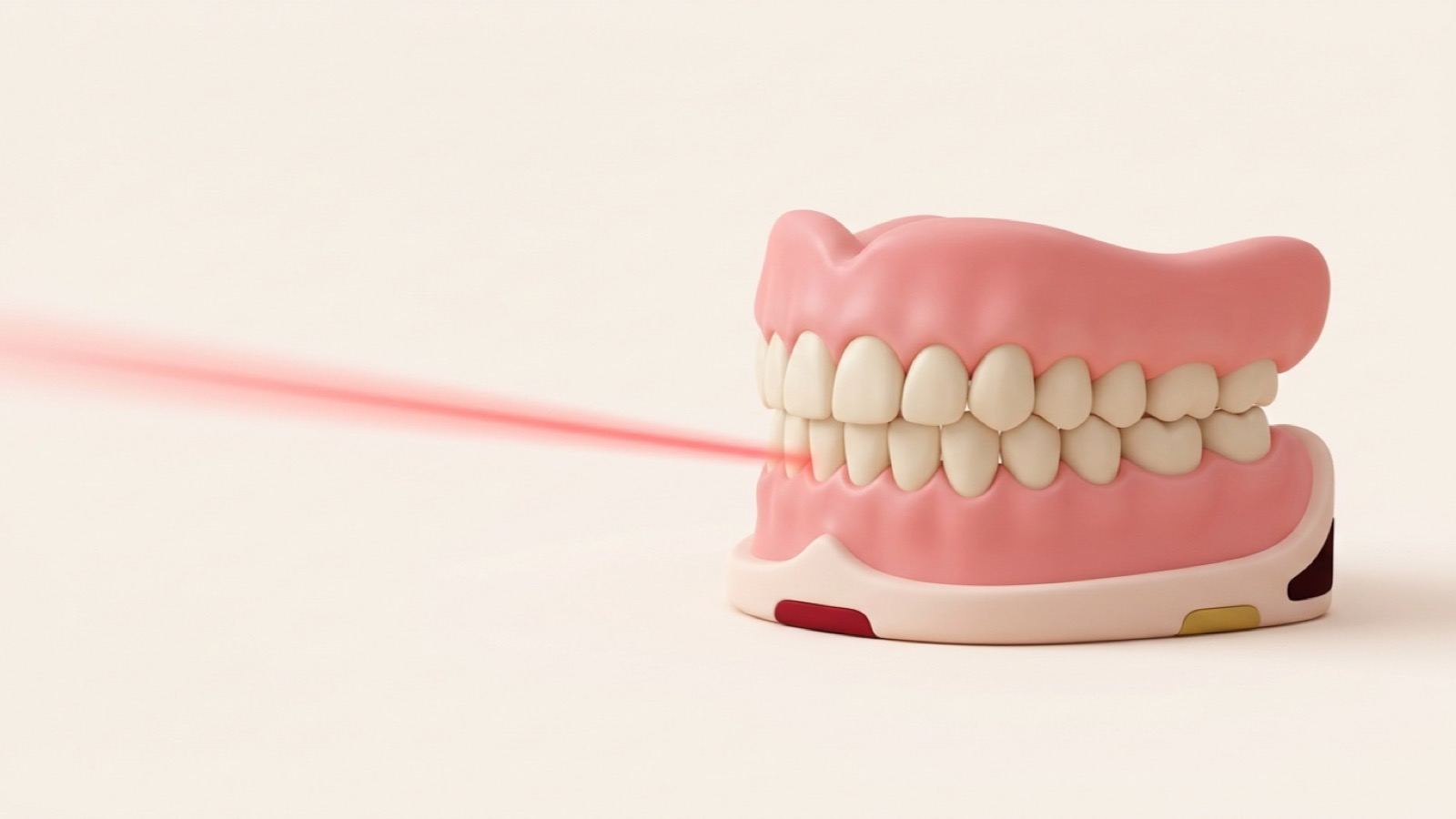
Laser dentistry uses focused light energy instead of traditional mechanical instruments for specific soft-tissue procedures, primarily involving the gums and mucosal linings.
Key features of dental laser applications:
- Targeted Light Energy: Concentrated wavelengths interact specifically with soft gum tissue, allowing precise contouring.
- Simultaneous Coagulation: The laser energy seals tiny blood vessels as it works, resulting in minimal bleeding and clear visibility during treatment.
- Reduced Disruption: Because there is no mechanical friction or vibration, surrounding tissues experience less surgical disruption.
Common clinical applications for soft tissue
Dental lasers are commonly utilized for cosmetic gum contouring (gingivectomy), frenectomies, and sanitizing inflamed periodontal pockets around teeth.
Specific uses include:
- Cosmetic Gum Contouring: Reshaping uneven gum lines to balance a 'gummy smile' and expose natural tooth structure.
- Frenum Release (Frenectomy): Releasing tight tissue bands under the tongue or upper lip with minimal bleeding.
- Periodontal Decontamination: Helping reduce bacterial deposits within deep gum pockets alongside standard scaling.
Comfort and recovery
Soft-tissue laser treatments typically require less local anaesthesia, rarely require surgical sutures, and allow gum tissues to recover quickly.
Post-procedure recovery advantages:
- Fewer or No Stitches: Most laser gum reshaping heals cleanly without the need for sutures.
- Comfortable Recovery: Most patients resume their normal routine and light diet on the same day.
- Clinical Discretion: A laser is one clinical tool among several; Dr. Arvind Sahu determines whether a laser-assisted approach applies to your specific case after an in-person evaluation at RedCity Dental in Ludhiana.
Related: Laser Dentistry in Ludhiana